A mechanical breakdown can turn a routine delivery into hours of downtime, expensive repairs, and missed deadlines. For truck drivers operating in Las Vegas, extreme summer temperatures, dusty conditions, and long highway trips make preventive maintenance particularly important.
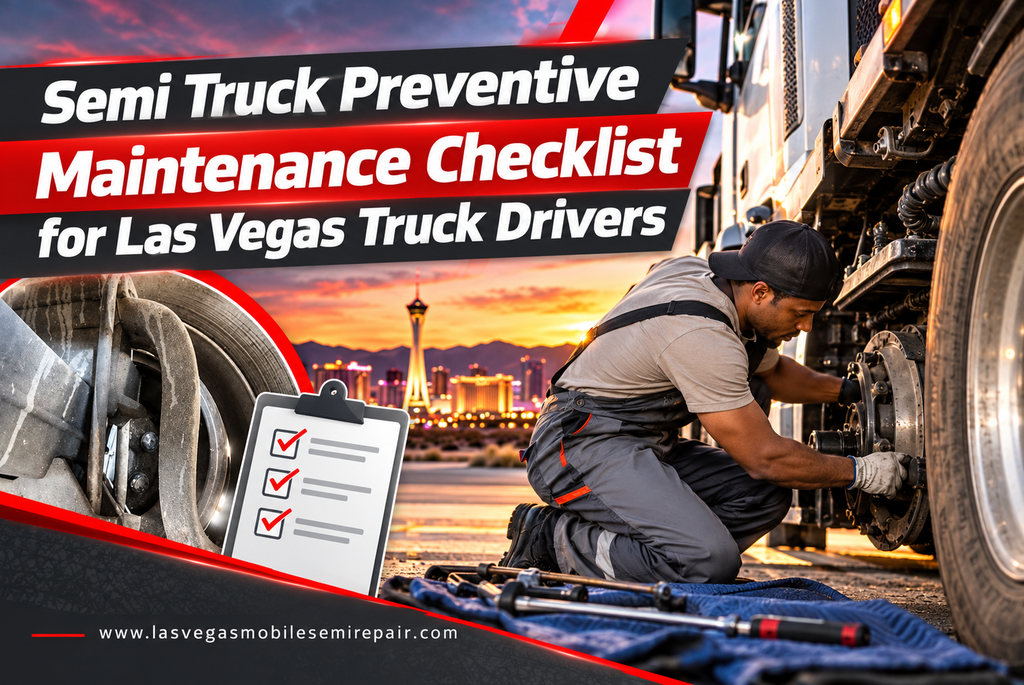
Following a reliable semi truck preventive maintenance checklist helps drivers identify worn components, detect fluid leaks, monitor tire conditions, and address mechanical problems before they become major failures.
Whether you’re an owner-operator traveling on I-15 or a fleet manager responsible for multiple commercial trucks, regular maintenance protects your equipment and supports safer operations. This guide covers daily inspections, scheduled maintenance, desert driving considerations, and important DOT inspection requirements.
Quick Answer: What Should a Semi Truck Preventive Maintenance Checklist Include?
A semi truck maintenance checklist should include daily inspections of tires, brakes, lights, fluids, steering, and coupling equipment. Drivers should also inspect their trucks after trips and schedule regular engine, cooling system, transmission, and suspension maintenance. In Las Vegas, particular attention should be paid to tire inflation, cooling system performance, and heat-related wear.
Why Is Preventive Maintenance Important for Las Vegas Truck Drivers?
Las Vegas presents several maintenance challenges for commercial truck operators. Summer temperatures regularly reach triple digits, while seasonal thunderstorms can bring strong winds and flash flooding. These conditions make it especially important to inspect cooling systems, tires, batteries, and electrical components.
Preventive maintenance offers several practical benefits:
- Identifying mechanical problems before they become costly roadside breakdowns.
- Reducing unexpected downtime and interruptions to delivery schedules.
- Supporting compliance with applicable DOT inspection and maintenance requirements.
- Helping maintain fuel efficiency and extending the service life of major components.
A consistent commercial truck maintenance schedule should account for mileage, engine hours, operating conditions, and manufacturer recommendations.
Daily Semi Truck Preventive Maintenance Checklist
1. Check Engine Oil and Coolant
Before starting your truck, verify the engine oil and coolant levels according to the manufacturer’s instructions. Look for leaks, damaged hoses, loose connections, and signs of fluid contamination. Never open a pressurized cooling system while the engine is hot.
2. Inspect Tires and Wheels
Check tire pressure when the tires are cold, preferably before the first trip. Inspect tread depth, sidewalls, valve stems, wheel fasteners, and signs of uneven wear. Federal regulations generally require at least 4/32 inch of tread on front steering tires and 2/32 inch on other tires. Tires with exposed cords, tread separation, or audible leaks must not be used.
3. Examine Brakes and Air Lines
Inspect visible brake components, air hoses, and connections. Perform the prescribed air brake checks, including air pressure buildup, leak testing, warning devices, and parking brake operation. Any indication of defective brakes requires attention before driving.
4. Check Lights and Electrical Systems
Verify that headlights, turn signals, brake lights, hazard lights, marker lights, and required reflectors are working. Check the dashboard for warning indicators and inspect visible battery cables for corrosion or loose connections.
5. Inspect Steering, Suspension, and Coupling Equipment
Check for loose steering components, damaged springs, leaking suspension air bags, and missing fasteners. Inspect the fifth-wheel locking mechanism, kingpin connection, safety devices, and trailer electrical and air connections.
Also inspect mirrors, windshield wipers, washer fluid, the horn, emergency equipment, and any required cargo securement.
What Should Drivers Check After Every Trip?
A post-trip inspection helps identify damage and wear that may have developed during a journey. Check for new fluid leaks, tire damage, brake problems, warning lights, and unusual noises.
Document any safety-related defects and notify the motor carrier so that repairs can be arranged before the next dispatch.
Under federal rules, most interstate property-carrying drivers are not required to submit a written Driver Vehicle Inspection Report (DVIR) when no defects have been discovered or reported. A DVIR is required when reportable defects are found. Company policies and other applicable requirements may add obligations.
Weekly, Monthly, and Annual Semi Truck Maintenance Schedule
Daily inspections are only one part of a complete diesel truck maintenance checklist. More detailed service should be performed by a qualified technician at intervals appropriate to the vehicle.
| Frequency | Recommended maintenance |
| Daily | Pre-trip inspection, fluid levels, tires, brakes, lights, and coupling |
| Weekly | Closer examination of belts, hoses, batteries, tire wear, and fluid levels |
| Monthly | Review filters, cooling system condition, electrical connections, and service records |
| Mileage-based | Engine oil, filters, lubrication, driveline, aftertreatment, and other manufacturer-specified services |
| Annually | Required periodic DOT inspection and a review of the maintenance program |
Weekly and monthly intervals are suggested planning checkpoints, not universal legal or manufacturer-prescribed service intervals.
FMCSA generally requires commercial vehicles, including applicable trailers, to undergo a periodic inspection at least once every 12 months. For fleet operators, every maintenance visit should be documented with the vehicle identification, mileage, date, work completed, and next scheduled service.
Special Preventive Maintenance Tips for Las Vegas Heat
Keep the cooling system in good condition
Inspect radiator condition, coolant hoses, clamps, belts, and cooling fans. Monitor engine temperature when operating in heavy traffic or climbing grades. An overheating warning is a reason to stop safely and investigate, not to continue toward the next delivery.
Pay extra attention to tire inflation
Heat generated during driving raises tire pressure. Check cold inflation against the pressure needed for the actual load, and do not release air simply because a properly inflated tire shows a higher pressure while hot.
Inspect air filtration and electrical components
Dusty operating environments can increase the need for filter inspections. Check air filter restriction indicators where fitted, inspect battery connections, and ensure the charging system and cab air conditioning operate properly.
When Should a Driver Stop and Call a Mechanic?
Some defects can be addressed during the next scheduled maintenance visit. Others require immediate action.
Safety alert: Seek professional assistance if you notice a serious brake malfunction, steering failure, dangerously damaged tire, low oil pressure warning, persistent overheating, or a substantial fuel leak.
If a serious problem appears while driving, pull over at the nearest safe location, secure the vehicle, and arrange appropriate repairs or recovery. Never attempt maintenance on an exposed highway shoulder when it is unsafe.
For problems that can be safely repaired on-site, mobile service may help avoid unnecessary towing and reduce time away from the road.
Keep a Simple Preventive Maintenance Record
An effective checklist is most useful when drivers and maintenance personnel can see what has already been inspected or repaired.
Record each truck’s mileage, inspection findings, repair dates, replaced parts, recurring faults, and upcoming service requirements. For fleets, assign responsibility for reviewing defects and closing maintenance work orders.
This makes it easier to recognize recurring problems and organize maintenance before a vehicle is scheduled for another trip.
Conclusion: Keep Your Semi Truck Ready for Las Vegas Roads
Consistent preventive maintenance helps truck drivers and fleet operators identify mechanical problems, plan repairs, and reduce avoidable interruptions. Daily inspections should focus on safety-critical components, while scheduled maintenance should follow manufacturer recommendations and operating conditions.
In Las Vegas, additional attention to cooling systems, tire pressure, and heat-related wear can help prepare trucks for demanding summer conditions.
If you schedule on-site service with Las Vegas Mobile Semi Repair, the standard service call is $300 and includes the first hour of labor. Weekend and after-hours service calls are $400. The labor rate is $175 per hour during both regular and after-hours service. Ask for an estimate covering the maintenance tasks, additional labor and required parts.
Need service? Las Vegas Mobile Semi Repair provides mobile diesel repair, scheduled fleet maintenance, DOT inspection services, and 24/7 roadside assistance in Las Vegas and surrounding areas. Call 702-830-3762 to request service.
Frequently Asked Questions
Semi trucks should receive a pre-trip inspection before driving, with regular follow-up inspections and scheduled servicing. The interval for engine oil changes, lubrication, filters, and major component inspections depends on the manufacturer’s recommendations, mileage, engine hours, operating conditions, and maintenance history.
Drivers should perform a complete pre-trip inspection rather than focusing on a single component. During extreme heat, tire pressure and condition, coolant level, cooling system performance, and any dashboard warnings deserve additional attention. Always address safety-critical defects before departure.
There is no universal oil-change interval for every semi truck. Engine model, oil specification, duty cycle, engine hours, operating conditions, and oil analysis can influence the schedule. Follow the engine manufacturer’s approved service interval, and do not extend it without appropriate supporting guidance.
Not necessarily. Interstate property-carrying drivers generally must prepare a DVIR when reportable defects are discovered or reported. A written no-defect DVIR is generally not required under federal rules for those drivers. However, a safe pre-trip inspection remains necessary, and additional company or applicable state requirements may apply.
Yes. Many routine inspections, diagnostics, fluid services, and component repairs can be performed on-site when the location is safe and suitable. More extensive repairs may require workshop facilities or specialized equipment. The appropriate service location depends on the truck’s condition and the work required.
Serious brake problems, steering abnormalities, overheating, substantial fluid leaks, low oil pressure, and dangerous tire damage require immediate attention. Drivers should stop in a safe location and contact a qualified repair provider rather than continuing to operate a potentially unsafe vehicle.